
Separation and Divorce Attorney Serving New Jersey and Philadelphia
Guiding you through divorce & separation with clarity and care
Divorce and separation can be some of the most difficult transitions in life, impacting not only you but also your children, finances, and future. At Garnes Law, we understand the stress and uncertainty you may be facing. Our mission is to provide steady guidance, protect your rights, and help you move forward with confidence — whether through negotiation, mediation, or litigation.
Understanding divorce in
PA & NJ
The divorce process differs between Pennsylvania and New Jersey, but both states require a careful review of legal and financial issues such as:
Division of marital property and debts
Child custody and parenting time
Child support obligations
Spousal support (alimony)
We help you understand your rights and responsibilities under state law, explain your options, and create a strategy that prioritizes your goals and your family’s well-being.


Types of divorce & separation cases we handle
At Garnes Law, we represent clients in a wide variety of family law matters, including:
Uncontested Divorce: Streamlined solutions for couples who agree on key issues.
Legal Separation: Guidance for couples seeking to live apart without dissolving their marriage.
Contested Divorce: Strong representation in cases involving disputes over property, custody, or support.
High-Conflict or High-Asset Divorce: Experienced handling of complex financial and custody disputes.
Post-Divorce Modifications: Adjustments to custody, visitation, or support when circumstances change.
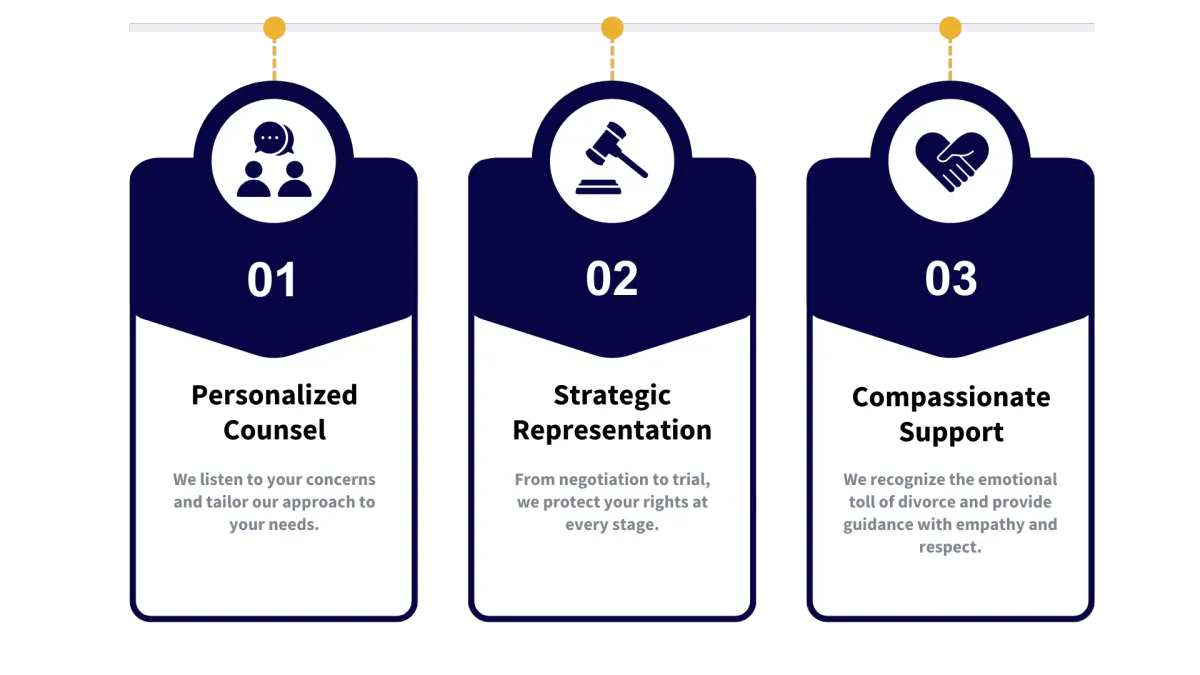
Our divorce process
Why Choose Garnes Law?

Extensive Family Law Experience
In-depth knowledge of Pennsylvania and New Jersey divorce laws.
Balanced Approach
We pursue amicable solutions when possible but are prepared to fight in court when necessary.
Client-Focused Service
You’re never just a case file — your future and your family matter to us.
FAQs
What is the difference between separation and divorce?
A legal separation means spouses live apart while remaining married; it can address support, custody, and property matters without ending the marriage. Divorce legally ends the marriage and resolves all financial and parental issues under state law.
How do divorce laws differ between New Jersey and Pennsylvania?
Both states require fair division of marital property, child support, custody decisions based on the child’s best interests, and consideration of spousal support. However, the legal standards, timelines, and residency requirements differ. A local attorney can explain which rules apply to your case.
How is marital property divided in New Jersey?
New Jersey uses equitable distribution, which means the court divides property fairly but not necessarily equally based on factors such as each spouse’s income, contributions to the marriage, and future needs.
How are child custody and parenting time decided?
Custody (legal decision‑making) and parenting time in New Jersey are determined by what the court finds is in the best interests of the child, considering factors like the parent‑child relationship, each parent’s ability to cooperate, and the child’s needs.
Will I have to pay or receive child support?
Child support in both New Jersey and Pennsylvania is based on statutory guidelines that consider both parents’ incomes, the number of children, and childcare or medical expenses. The goal is to provide consistent support that meets the child’s needs.
What should I expect from the divorce process?
The divorce process involves gathering financial documents, negotiating property division, addressing custody and support, and possibly attending mediation or court hearings. An attorney will help you understand timelines, protect your rights, and shape a strategy that supports your goals.
Ready to take the next step?
Schedule a confidential consultation online.
Request a Free Consultation
Cherry Hill Office
3 Executive Campus
2370 Marlton Pike West Suite 255
Cherry Hill, NJ 08002
Phone: 856-438-5234
Fax: 856-282-1159
Philadelphia Office
One Liberty Place
1650 Market Street 36th Floor
Philadelphia, PA 19103
Phone: 267-838-9713
Fax: 856-282-1159
Copyright. David T. Garnes LLC. 2026. All Rights Reserved.


